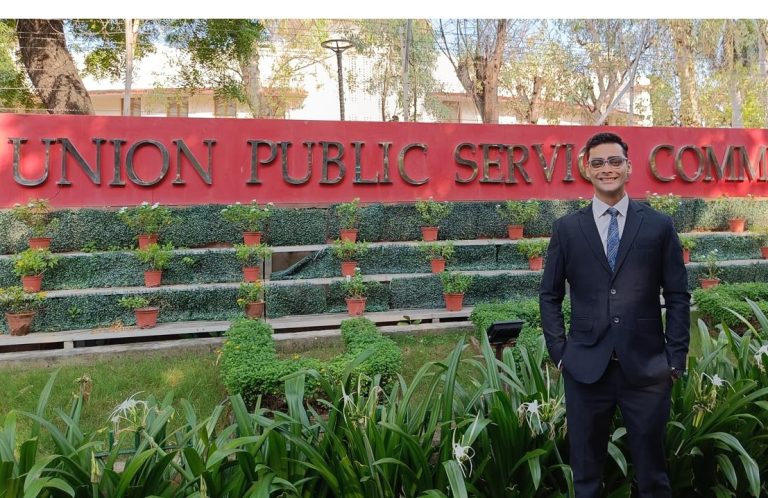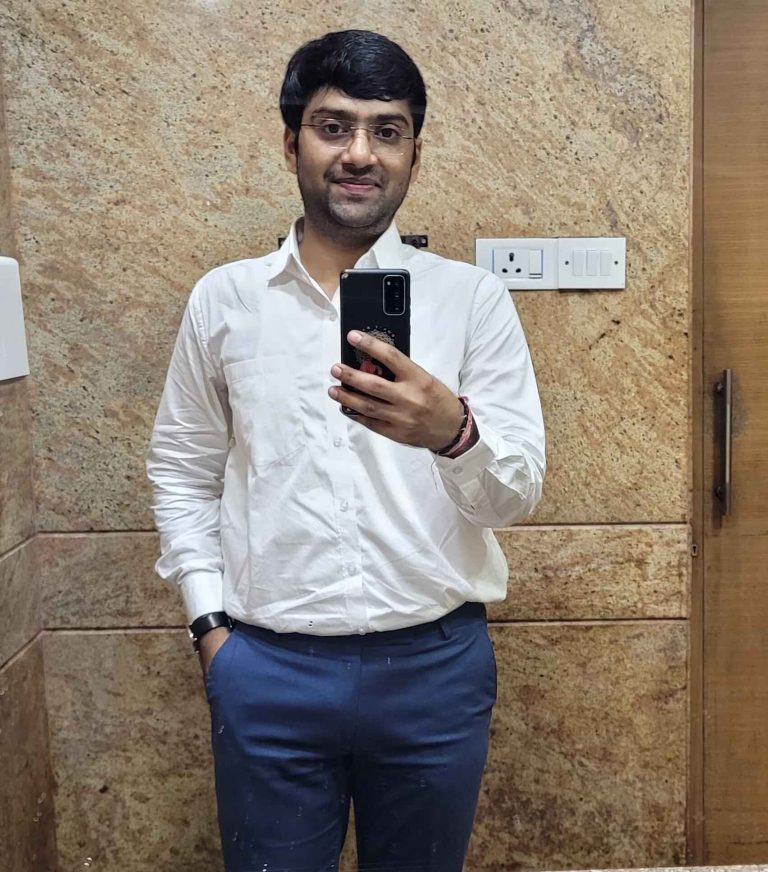
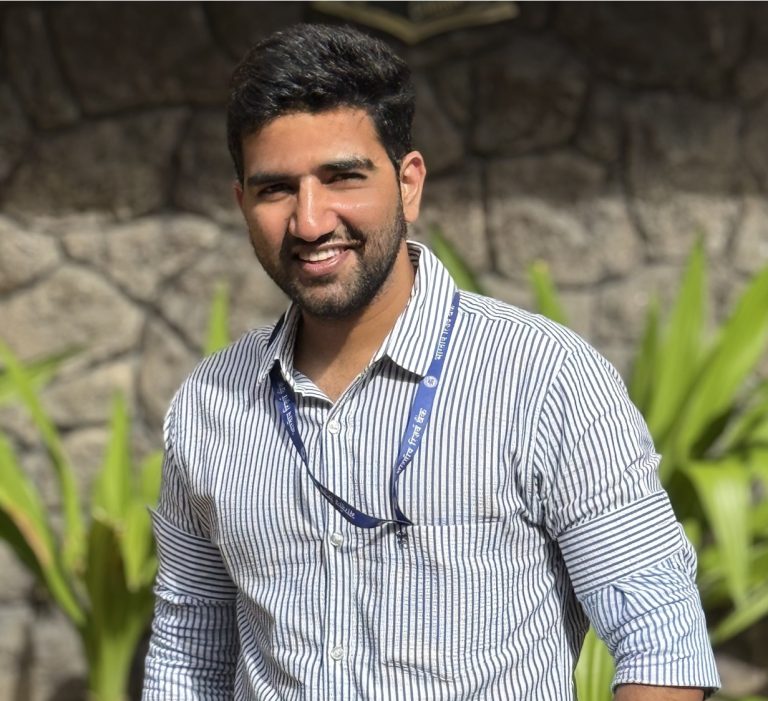
The Indian Economic Service (IES) is one of the most prestigious services in India, recruiting the country’s brightest young economists to assist and lead the Government on policy formulation. In our continued effort to demystify this examination, we are thrilled to share the interview transcript of Abhishek Nehra. Abhishek completed B.A. (H) Economics from Hansraj College and M.A. Economics from Delhi School of Economics, complemented by high-impact industry experience at American Express and the Reserve Bank of India (DEPR Cadre) . Here is a detailed look at how Abhishek navigated his IES interview.
UPSC IES Interview Transcript: Abhishek Nehra, AIR-7
Date: Sept 15, 2025
Slot: First Day, First Session, 4th Slot
Duration: 30 minutes
Marks: 144 out of 200
Just before entering the room, when I was sitting outside, I kept asking if it was past 12 noon. I entered exactly at 12:02, so I wished good afternoon to all. They smiled.
I looked at the room- four female members, and just behind them, the Honourable President Murmu’s photo frame on the wall. It felt good.
They were very cordial and made me comfortable.
Question 1 – Chairperson
Ma’am started reading my DAF: “D-School, Amex, now RBI. Why do you want to leave RBI and join IES?”
My Answer: Both are great opportunities to serve the country. While the job at RBI involves economic research for macroeconomic policy, I am more inclined to contribute to public policy….
Follow-up: “That being said, you can still contribute to policy inputs at RBI too.”
My Answer: Yes Ma’am RBI also provides that opportunity. The reason for my inclination towards IES is that, during COVID, I have seen how government policies like PDS or MGNREGA have the potential to transform the lives of vulnerable sections. That has made me more passionate about these policies, and I think I can contribute better by suggesting policy inputs that can create synergies across government policies and schemes.
Chairperson: “Okay, Let’s talk about PDS. Should we introduce food coupons instead of grains? Is that possible?”
My Answer: Yes Ma’am, it’s possible. CBDC can also be used for this purpose, as it can enable end use tied funds….
Chairperson: “Good. But what are the benefits and negatives of doing so?”
My Answer: I explained, they noted points one by one. I also mentioned Shanta Kumar panel report highlighting the current issues and why we need to better target beneficiaries.
Chairperson: “Should we do it then?”
My Answer: I made a balanced statement, something like pilot phase or so.
(Probably Ma’am wanted a clear yes or no)
Second Member: “Okay, I’ll again go back to RBI. DAF mentions your salary as ₹X. In IES, you’ll get significantly lower. Are you aware of that?”
My Answer: Yes, ma’am.
Second Member: “Then why are you making this decision?”
My Answer: Ma’am, money is not the only factor in my decision. I will find greater satisfaction….
Second Member: “But being an economist, you should be rational. You should make rational decisions. Money will give you higher utility.”
My Answer: Yes ma’am, money gives utility, but beyond a point, it will have diminishing utility….
(In this discussion, they kept asking question before I could complete answer, so I just tried to not interrupt any member)
Second Member: “What is Rational Expectation?”
My Answer: I explained it.
Follow-up: “Who gave it?”
My Answer: Milton Friedman
(I got it wrong. It’s Lucas, and I knew it, but somehow confused it with adaptive expectation. I should not have made this mistake)
Third Member:
Asked direct questions like:
- Any three points from the recent RBI Bulletin
- State of the economy
- Trade tariffs
- Impact on India and world. Most vulnerable sectors
- Discussion on impacted items from Rajasthan and how to minimise the impact.
I answered all fairly.
Chairperson (again): Discussion around agriculture sector, impact of US tariffs:
“Don’t you think Trump is doing the right thing for his country as India charges high tariffs and hence should we lower tariffs on agriculture?”
My Answer: Yes Ma’am, Mr. Trump might be doing what’s best suited for US. Similarly we have to also prioritise our India’s interest. And for that we need to protect agriculture as it is sensitive and nearly 46% of the workforce depends on it….
(Probably ma’am was asking from that day’s Indian Express article by Prof. Ashok Gulati, in which he advocated opening of agriculture sector to increase productivity)
But I answered that just like in the UK trade deal, where we safeguarded farmers’ interests while still having a good trade deal, we should aim for something similar while continuing trade negotiations with the US.
Fourth Member: Questions on tech layoffs, AI impact, and jobs.
My Answer:
I mentioned the ILO study on job losses and explained reinstatement and displacement effects. Then I talked about what we need to do- focus on enabling, insuring, and stewarding institutions to minimise losses and maximise opportunities
(Economic Survey pointers were quite helpful here).
Last Question: “Why is Mr. Trump calling Russia’s war as Modi’s war?”
My Answer: He is saying so because he thinks India is indirectly funding Russia’s war by buying huge amounts of crude oil. But the Honourable President is not right in saying so, as India reserves its right to buy cheaper oil wherever available. It is very crucial for India for inflation reduction as well.
After the Interview
I came out at 12:32, so it lasted around 30 minutes.
Everything went well except that one question which I answered wrong.
I was feeling very good and I really enjoyed the conversation.
Note : Abhishek Nehra was enrolled in only Indian Economic Service Interview Guidance Programme 2025 with Testonomics, for Indian Economic Service Exam preparation !
At Testonomics, we believe in complete transparency when publishing interview transcripts. We clearly state whether a candidate was enrolled in any of our RBI DEPR Coaching or RBI DEPR Test Series before selection. Since 2021, we have consciously avoided any form of misleading marketing. On our Toppers at Testonomics page, you’ll find clear and honest details of the specific courses each successful candidate attended. This way, readers know exactly what role, if any, our programs played in their preparation.
Whenever you are recommended / selected for any Economics-specialist recruitment exam, we request you and encourage you to publish your Interview Transcript at Testonomics.
For aspirants preparing for the RBI DEPR Interview, Indian Economic Service (IES) Interview, or any other economics-based recruitment interview, previous years’ interview transcripts are truly invaluable. They provide rare, real-world insights into the types of questions asked, the thought process behind successful answers, and the overall interview experience. Unfortunately, such transcripts are still in short-supply, for various reasons.. That’s why we encourage selected candidates to share their interview transcripts – your experience could guide and inspire aspirants even a decade from now. And years later, you might enjoy revisiting your own transcript as a treasured memory of your journey.