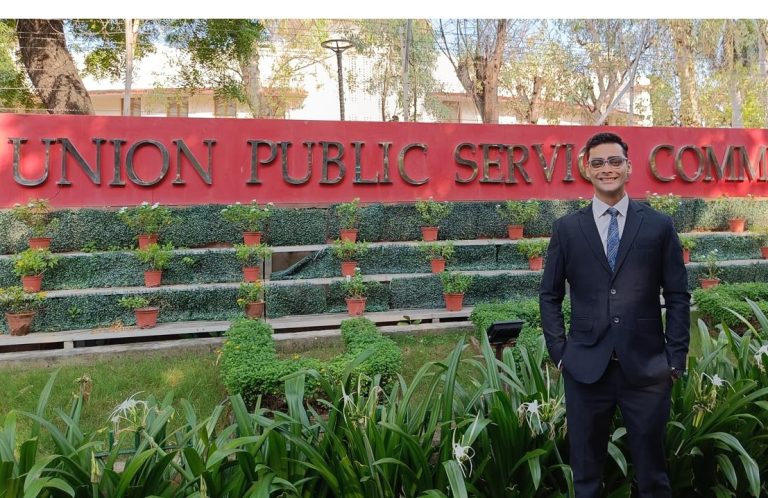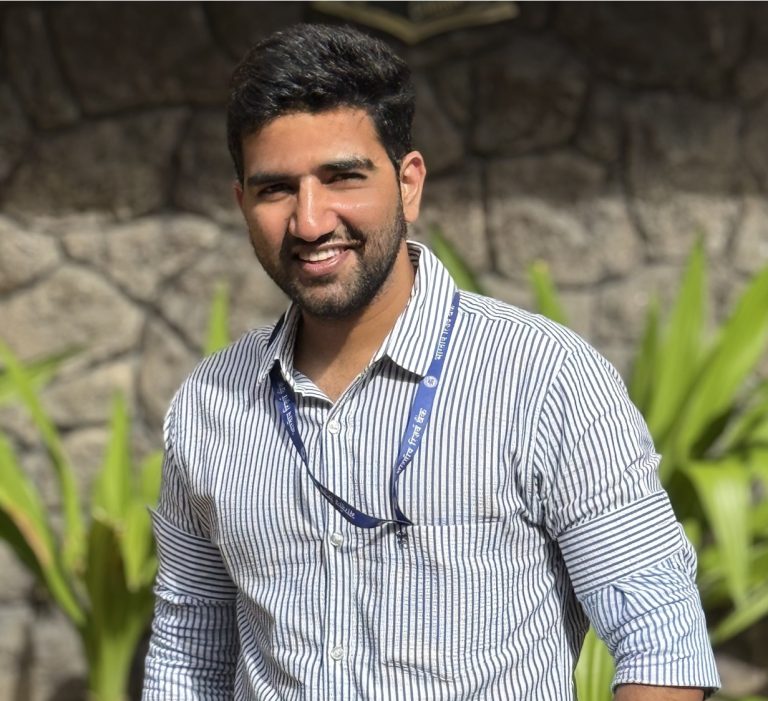
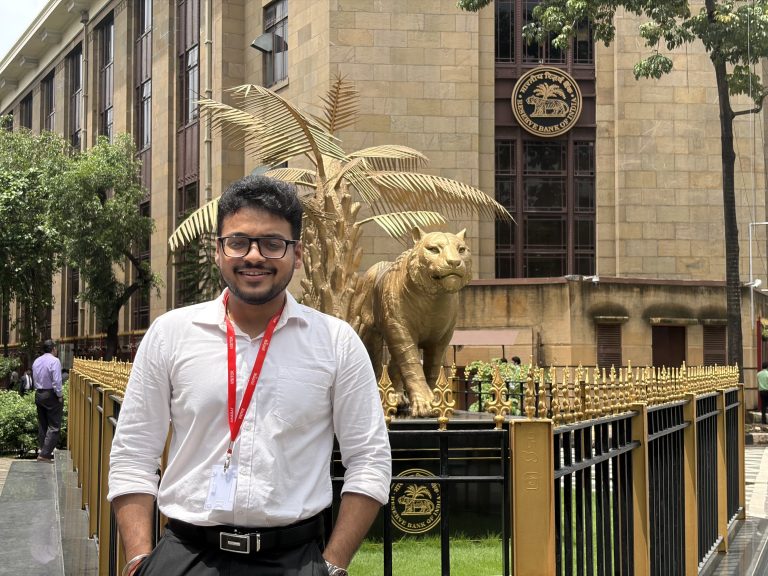
Candidate Name: Amogh Vishal Sangewar
Educational Background: BA (Hons.) Economics from SRCC (2022) and MSQE from ISI Delhi (2024).
Result: (Rank 5) Recommended/Selected
Hi, I’m Amogh Vishal Sangewar. I qualified the RBI Grade-B (DEPR) 2025 examination in my first attempt. My interview was held on 23rd March 2026 in the first half. I was the second candidate of the day. The interview lasted for around 45 minutes, which was quite long compared to the average duration.
Overall Experience: While the panel was cordial, some members were keen on cross-questioning, which at times seemed like a bit of a stress test. At times, they also explicitly pointed out that I was wrong. The questions were generally of very good quality, and I could answer many of them only after some nudging and guidance from the panel.
I’m sharing my interview transcript for the benefit of those preparing for the RBI Grade-B (DEPR) interview.
M1: Chairman
Introduced himself and asked me for my introduction. A few follow-ups about my educational background and my previous job.
M2: Import Dependency
Sir: Which areas of economics do you like the most?
Me: Sir, Macroeconomics and Econometrics.
Sir: Okay, Macro. Tell me, what is the import dependency India should be most concerned about today?
Me: Petroleum, sir, because a major part of our import bill consists of it, and current geopolitical tensions and the West Asia crisis would affect the same even further.
Sir: Okay. Something else?
Me: Sir, fertiliser imports would also be affected.
Sir: No, not related to the ongoing war and everything. Something else for which India is hugely dependent, mainly on China?
Me: (I got confused) Sir, I can’t recall at the moment.
Sir: Something related to renewable energy?
Me: Sir, India depends hugely on China for solar equipment.
Sir: Which parts? Tell me exactly.
Me: (At this point, I started feeling nervous) Sir, I’m not aware.
Sir: Okay, thanks, Amogh (probably expecting solar cells or something more specific).
M3: Research Experience and NPAs
Sir: You’ve done research on NPAs in India. What exactly did you look for?
Me: I used econometric models to assess the role of macroeconomic and bank-specific factors behind high NPAs in India until 2020.
Sir: Why use data only up to 2020?
Me: Sir, I worked on this during my undergrad, so I had data only up to that point.
Sir: Okay, what did you find?
Me: (I explained my findings in detail. Had learnt the paper’s abstract by heart.)
Sir: What is the current NPA situation?
Me: Sir, they’ve significantly reduced in the past few years (mentioned a few stats from FSR).
Sir: Why have they reduced?
Me: (Briefly spoke about IBC, 4R strategy, ARCs, etc.)
M4: NBFCs
Sir: Have you included NBFCs in your data?
Me: Yes, sir. Not separately, but I’ve used aggregate GNPA and NNPA data, which inherently included NBFCs.
Sir: Explain the balance sheet of NBFCs.
Me: (I wasn’t exactly aware of this, so mentioned a few things drawing from my general understanding.)
Sir: What is their source of funds?
Me: I’m not exactly sure, sir, but borrowing from banks could be one source.
Sir: What about the bond market?
Me: Yes, sir, the bond and money markets are also viable sources.
Sir: Why do we need NBFCs?
Me: Sir, they’re required for last-mile reach of credit in rural areas and financial inclusion, to meet our long-term vision of Viksit Bharat.
M4: Viksit Bharat
Sir: Explain Viksit Bharat. At what rate does India need to grow to achieve it?
Me: Sir, Viksit Bharat is the long-term vision of the Government of India to make India a 30 trillion dollar economy by 2047. In terms of growth rate, sir, India needs double-digit growth rates to achieve this (had read a random article before which mentioned this stat. I realised later that it was not correct).
Sir: Are you sure? (Everyone seemed surprised. I nodded.)
Sir: Show the calculation on paper (pointed towards a diary and pen kept beside me).
Me: (I was quite nervous seeing their reactions. I took the pen and started scribbling.)
Sir: Walk us through your calculations as well.
Me: (I couldn’t derive the rate exactly, so explained the overall procedure verbally.) Sir, currently India’s GDP is around 4 trillion dollars. We can use the doubling time formula again and again to see how much time it’d take to reach the 30 trillion mark with a growth rate of, say, 12 percent, and then adjust the rate based on our calculation (could not actually calculate the exact rate).
Sir: Check later whether two-digit growth is required or not.
Me: Yes, sir (extremely embarrassed).
M5: Monetary Policy
Madam: Given the current situation, what, according to you, should be RBI’s position regarding monetary policy?
Me: (In the pressure, I misunderstood and said something about forex reserves management. The chairman looked quite disappointed. Ma’am repeated.) I’m asking monetary policy.
Me: (Apologised and corrected myself) I believe RBI should have an expansionary view given the potential loss in growth due to the ongoing geopolitical uncertainties.
Madam: (Ma’am stopped me.) But don’t you think we should wait for another policy cycle and keep a neutral stance and see how the prices will move?
Me: Yes, Ma’am, we also need to think of inflationary pressures. (Ma’am smiled and pointed out that I was changing my answer.)
M1: Growth Models
Sir: Name a few growth models you know? (I mentioned some.)
Sir: What is the Solow model?
(Asked many follow-up questions, including the role of savings, returns to factors and so on, which I mostly answered.)
Finally, Chairman sir said thank you. I greeted them back and left.
— End of Amogh Sangewar’s RBI DEPR Interview Transcript —
Note: Amogh Sangewar was enrolled only in RBI DEPR 2025 Interview Guidance Programme with Testonomics.
Preparing for RBI DEPR?
If you are preparing for RBI Grade B DEPR / RBI Economist recruitment, you may also find these resources useful:
Join Testonomics RBI DEPR Telegram Channel
Get RBI DEPR exam updates, preparation resources, interview transcripts and other useful material.